
10 B2B SaaS Customer Segmentation Strategies to Master in 2026
In the competitive B2B SaaS landscape, a one-size-fits-all approach to customer communication is a recipe for churn. Your customers, from a newly onboarded SMB to a power-user enterprise team, have vastly different needs, goals, and engagement patterns. Failing to recognize these differences leads to irrelevant messaging, missed expansion opportunities, and preventable churn. This is where strategic customer segmentation strategies become your most powerful lever for growth.
Effective segmentation allows you to move beyond generic broadcasts and deliver hyper-relevant, timely messages that resonate with specific user groups. It is the foundation for activating new users, driving feature adoption, and unlocking expansion revenue. By understanding who your customers are and what they need at each stage of their journey, you can proactively address their pain points and guide them toward success with your product. This targeted approach not only improves engagement but also directly impacts your bottom line by reducing churn.
This guide moves past theory and dives into execution. We will break down 10 essential customer segmentation strategies, providing actionable steps, real-world examples, and specific tips for implementing them with a powerful automation platform like SMASHSEND. You'll learn how to define your segments, what data to use, and how to build automated workflows that turn these deep customer insights into tangible revenue.
1. Behavioral Segmentation
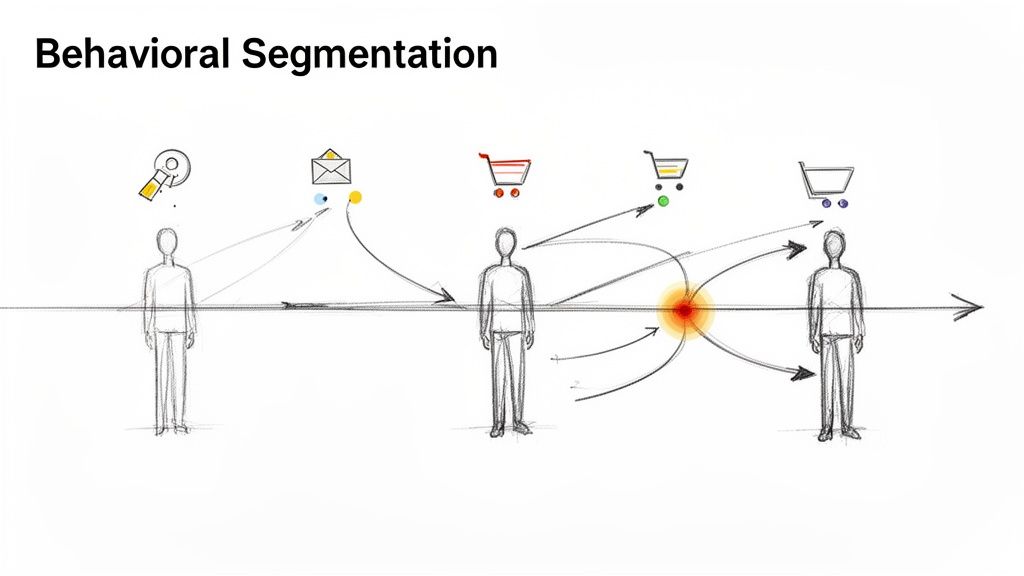
Behavioral segmentation is one of the most powerful customer segmentation strategies for B2B SaaS companies. It involves grouping users based on their direct interactions with your product, website, and marketing communications. Instead of relying on static traits, this method focuses on dynamic actions, such as feature usage frequency, specific actions taken, content downloads, or email engagement patterns.
This approach provides a clear window into how customers derive value from your platform. By analyzing behavior, you can understand which features are critical for retention, identify users at risk of churning, and pinpoint accounts primed for an upgrade. For product-led growth (PLG) models, understanding user actions is the foundation of the entire customer lifecycle, from activation to expansion.
When to Use This Strategy
Behavioral segmentation is essential when your goal is to drive specific actions within your user base. It is ideal for onboarding new users by guiding them toward "aha!" moments, re-engaging inactive accounts with targeted content, and identifying power users to invite into beta programs or upsell to higher-tier plans.
Actionable Implementation Tips
To effectively implement behavioral segmentation, focus on tracking and acting upon meaningful user events.
Define Key Behavioral Thresholds: Establish clear definitions for user segments. For example, a "Power User" might be someone who uses a core feature more than five times a week, while an "At-Risk User" hasn't logged in for 14 days.
Trigger Automated Workflows: Use these behavioral triggers to launch targeted email campaigns. For instance, if a user tries a premium feature for the first time, send them an automated email a day later highlighting its advanced benefits. You can track these actions in real-time by setting up custom events. Discover how to track behavioral data with SMASHSEND's Events API.
Leverage Conditional Content: In your SMASHSEND campaigns, use Conditional Blocks to display different content within the same email based on a user's behavior. A "getting started" email could show different tips to users who have completed their profile versus those who haven't.
2. Firmographic Segmentation
Firmographic segmentation is a cornerstone of B2B marketing, involving the categorization of customers based on company-level attributes. This strategy groups businesses by characteristics like industry, company size, annual revenue, geographic location, and employee count. Unlike behavioral data, which is dynamic, firmographics provide a stable, foundational layer for understanding your target market.
This method is essential for B2B SaaS companies because it allows for precise targeting and ensures that marketing messages align with the specific challenges and goals inherent to different types of organizations. For instance, a small tech startup has vastly different needs than a multinational manufacturing firm. By segmenting based on these firmographics, you can tailor your value proposition to resonate with each group, forming the basis for effective account-based marketing (ABM) strategies.
When to Use This Strategy
Firmographic segmentation is most effective when you need to define your Ideal Customer Profile (ICP) and qualify leads at scale. It's the first step in building a targeted acquisition strategy, ensuring your sales and marketing efforts are focused on accounts that are most likely to convert and succeed with your product. Use it to prioritize high-value industries, create region-specific campaigns, or tailor offerings for different company sizes, like Salesforce does with its small business and enterprise tiers.
Actionable Implementation Tips
To apply firmographic segmentation, focus on data accuracy and integration with your marketing automation platform.
Enrich and Define Your ICP: Use data enrichment tools to automatically append firmographic data to your contacts. Create a core segment in SMASHSEND that precisely matches your ICP criteria (e.g., industry, employee count) and use it to exclude non-fit companies early in the marketing funnel. Learn how you can automate this with SMASHSEND's Company Enrichment feature.
Combine with Behavioral Data: Create powerful, high-intent segments by layering firmographic data with user actions. For example, target "mid-market SaaS companies in North America that have completed onboarding" for a specific upsell campaign.
Personalize Content at Scale: Use Personalization Tokens in your email campaigns to insert company-specific details like company name or industry. This simple touch makes automated messages feel more relevant and directly addressed to the recipient's business context.
3. RFM Segmentation (Recency, Frequency, Monetary)
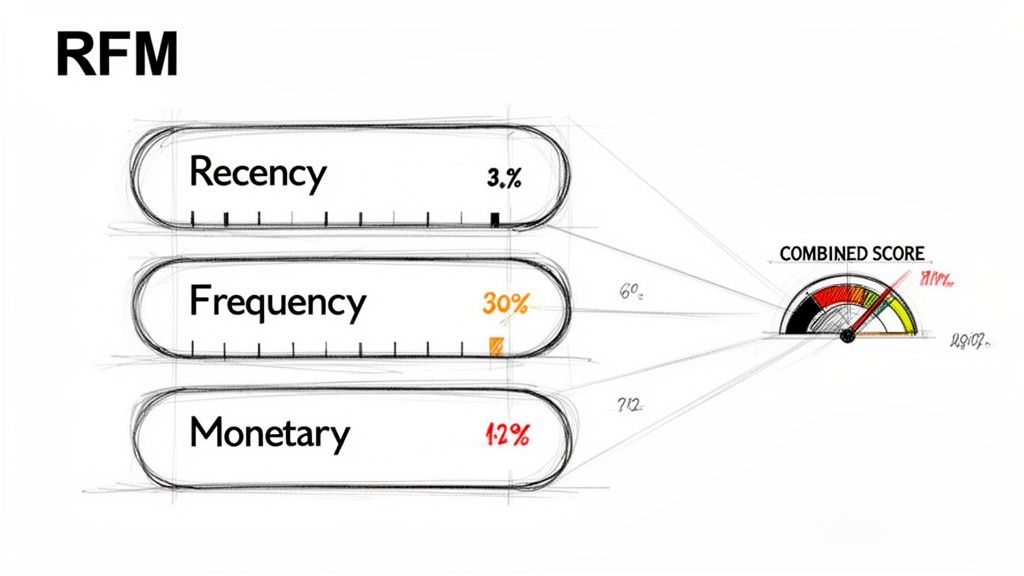
RFM segmentation is a quantitative method that scores customers based on three key dimensions: Recency (how recently they engaged), Frequency (how often they engage), and Monetary value (how much revenue they generate). Originally popularized in direct mail, this classic technique is highly effective for B2B SaaS because it provides a simple, numerical framework to identify your most valuable customers and those at risk of churning.
By assigning a score (e.g., 1-5) to each dimension, you can create a combined RFM score that quickly categorizes accounts. This model helps you move beyond single-metric analysis, offering a holistic view of customer health. For instance, a customer with a high monetary value but low recency score is a clear churn risk who requires immediate attention.
When to Use This Strategy
RFM is one of the most versatile customer segmentation strategies, especially when your goal is to prioritize marketing and customer success efforts. Use it to identify your "VIP" accounts (high scores across R, F, and M) for loyalty programs or beta invitations. It's also ideal for creating targeted win-back campaigns for "at-risk" customers (low recency, high frequency/monetary) or nurturing new users (high recency, low frequency/monetary).
Actionable Implementation Tips
To apply RFM segmentation, focus on creating clear definitions and automated actions based on scores.
Define Scoring and Tiers: Establish clear time windows and value thresholds. For example, Recency could be scored based on login activity in the last 7, 30, or 90 days. Create named segments like "Champions" (5,5,5), "Potential Loyalists" (3,4,4), and "Hibernating" (1,2,2) to make the data actionable.
Weight Components Strategically: Not all RFM components are equal for every business. A high-growth SaaS might weight Recency and Frequency more heavily to encourage habit formation, while an enterprise-focused model may prioritize Monetary value to identify expansion opportunities.
Automate Tier-Based Campaigns: Use SMASHSEND's automation features to trigger workflows when a customer's RFM score changes. For example, if a "Champion" drops to a "Hibernating" score due to low recency, automatically enroll them in a re-engagement sequence highlighting new features or offering a check-in from customer success.
4. Lifecycle Stage Segmentation
Lifecycle stage segmentation is a cornerstone of effective customer segmentation strategies, grouping customers based on their position in the journey with your brand. This method tracks users from initial awareness and consideration through onboarding, active use, expansion, and eventually, retention or churn. For B2B SaaS, this approach is vital because the needs, goals, and appropriate messaging for a new trial user are vastly different from those of a long-term power user.
This strategy ensures your communication is always contextually relevant and timely. By aligning your marketing, sales, and product messaging with a user's current stage, you can guide them more effectively toward the next milestone. For example, HubSpot famously uses this model to deliver different content to leads versus established customers, ensuring every interaction adds value and moves the relationship forward.
When to Use This Strategy
Lifecycle stage segmentation is most effective when you need to nurture customers through a multi-step journey. It is perfect for designing structured onboarding sequences, identifying accounts ready for an upsell conversation, and creating proactive retention campaigns for users who show signs of disengagement. This strategy provides the framework for a cohesive and logical customer experience from their first touchpoint to their ten-year anniversary.
Actionable Implementation Tips
To implement lifecycle stage segmentation, you must define clear, data-driven transitions between each stage.
Define Stage Advancement Criteria: Establish specific, measurable triggers for moving a user from one stage to the next. For instance, a user graduates from "Onboarding" to "Active" after they create their first workflow or invite three team members.
Create Stage-Specific Automated Workflows: Build automated email sequences in SMASHSEND for each lifecycle stage. An "Active User" sequence might focus on advanced feature education, while a "Retention" sequence could offer a consultation or a special incentive.
Use Personalization for Context: Leverage Personalization Tokens to reference a user's specific progress. For example, an email could say, "Hi [FirstName], now that you've mastered [Feature X], here's how to integrate it with [Tool Y]." Discover more about creating these targeted journeys in our guide to SaaS email marketing.
5. Psychographic and Value-Based Segmentation
Psychographic and value-based segmentation moves beyond what customers do to understand why they do it. This strategy groups customers based on their attitudes, values, priorities, and the specific outcomes they seek from your product. Instead of focusing solely on actions, it uncovers the core motivations driving their purchase and usage decisions, making it one of the more nuanced customer segmentation strategies.
For B2B SaaS, this means identifying whether a customer is an "efficiency maximizer" who values speed and automation, a "data-driven strategist" who prioritizes analytics, or a "collaboration champion" who seeks features that unite their team. Understanding these underlying drivers allows you to tailor not just your messaging, but your entire product experience, to what truly matters to each segment. Companies like Slack effectively use this by appealing to "transparency advocates" and "productivity hackers" with distinct value propositions.
When to Use This Strategy
This strategy is most effective when your product serves multiple use cases or when you need to differentiate your brand in a crowded market. It is ideal for crafting resonant marketing messages, aligning product development with the priorities of your most valuable customer segments, and guiding high-level strategic positioning. Use it to ensure your value proposition lands perfectly with different buyer personas.
Actionable Implementation Tips
To implement this strategy, you must go beyond product analytics and connect directly with your customers.
Uncover Motivations with Research: Conduct customer interviews and surveys focused on their goals, challenges, and priorities. Ask open-ended questions like, "What business outcome were you hoping to achieve with our product?" or "What is the most important metric your team is measured on?"
Develop Value-Based Personas: Create detailed personas that include explicit value statements. For example, a persona might be "The Systematizer," whose primary value is creating repeatable, scalable processes and who prioritizes reliability and integration capabilities above all else.
Tailor Messaging in Your Campaigns: Use SMASHSEND's Custom Fields to store psychographic attributes for each contact. You can then use personalization tokens in your email copy to reflect their specific values, or use conditional blocks to show entirely different messaging angles to "efficiency seekers" versus "data-driven" users within the same campaign.
6. Technographic Segmentation
Technographic segmentation groups customers based on the technology stack they use, from software and tools to their core technical infrastructure. For B2B SaaS companies, this is a highly effective customer segmentation strategy because it reveals a company's technical sophistication, budget for software, and potential integration needs. Knowing what tools a prospect or customer already uses helps you tailor your messaging to highlight compatibility, seamless integration, or competitive advantages.
This approach allows you to identify companies that are a perfect fit for your product. For instance, if your software integrates deeply with Salesforce, targeting companies that already use Salesforce dramatically increases the relevance of your pitch. It also helps in identifying potential churn risks, such as a customer adopting a competitor's tool, and uncovering opportunities for strategic partnerships with complementary software vendors.
When to Use This Strategy
Technographic segmentation is most powerful when your product's value is enhanced by or dependent on a customer's existing tech stack. It is ideal for identifying high-fit prospects for outbound sales, creating targeted marketing campaigns that highlight key integrations, and personalizing onboarding experiences to help users connect your tool with the other software they already rely on.
Actionable Implementation Tips
To implement technographic segmentation, you need to gather data on the tools your customers and prospects use and act on those insights.
Identify Competitor and Complementary Tools: Use data enrichment platforms like G2 or Crunchbase to identify companies using competitor tools. Create a segment like "companies using a competing CRM" and send them campaigns emphasizing your unique differentiators or easier migration process.
Map and Promote Integrations: Segment users based on the presence of complementary software (e.g., Slack, Asana, Google Analytics). Send them targeted content showcasing how your integration can streamline their workflows. For example, Zapier identifies users of specific apps and suggests popular "Zaps" to connect them.
Demonstrate Technical Alignment: In your SMASHSEND campaigns, use Personalization Tokens to dynamically mention a tool the user has in their stack. An email could say, "See how SMASHSEND's integration with [Customer_CRM_Tool] can sync your contacts in real-time," making the message immediately relevant.
7. Intent-Based Segmentation
Intent-based segmentation is a proactive strategy focused on grouping potential and existing customers based on signals that indicate a strong interest in solving a specific problem or making a purchase. Instead of waiting for a direct action like a signup, this method leverages digital breadcrumbs such as keyword searches, visits to specific website pages, competitor comparisons, and content downloads to identify accounts that are actively in a buying cycle.
For B2B SaaS companies, this is one of the most predictive customer segmentation strategies for identifying high-value leads and expansion opportunities. By tracking both first-party intent (actions on your own website) and third-party intent (activities across the web), you can prioritize sales outreach and marketing efforts on accounts that are most likely to convert. This approach helps sales teams engage prospects at the perfect moment, just as their need becomes critical.
When to Use This Strategy
Intent-based segmentation is most valuable when you need to improve the efficiency of your sales and marketing teams by focusing on the warmest leads. It is ideal for identifying high-fit accounts for account-based marketing (ABM) campaigns, prioritizing outbound sales efforts, and creating timely, relevant outreach that addresses a prospect's immediate pain points. It is also effective for spotting churn risk when existing customers begin researching competitors.
Actionable Implementation Tips
To successfully implement intent-based segmentation, you need to combine data sources and create automated alerts for your revenue teams.
Define Key Intent Signals: Create a scoring model based on high-value actions. For example, a "High-Intent Account" might be one that has visited your pricing page twice, downloaded a case study, and searched for "best alternative to [competitor name]" in the last 30 days.
Trigger Real-Time Sales Alerts: Use webhooks or native integrations to send immediate notifications to your sales team when an account crosses a specific intent threshold. This allows for rapid follow-up while the prospect is still highly engaged.
Personalize Outreach with Intent Context: In your SMASHSEND campaigns, use Personalization Tokens to reference the specific topic or content a prospect showed interest in. An email could say, "Saw you were exploring solutions for [topic]. Here's how our [feature] can help you solve that exact challenge."
8. Account-Based Marketing (ABM) Segmentation
Account-Based Marketing (ABM) segmentation flips the traditional marketing funnel on its head. Instead of casting a wide net, this B2B-specific strategy treats high-value accounts as individual markets. It involves creating hyper-personalized campaigns tailored to each target account's unique business challenges, key decision-makers, and buying stage, making it one of the most focused customer segmentation strategies.
This approach is highly effective for enterprise and high-touch SaaS because it forces deep alignment between sales and marketing teams. By combining firmographic, behavioral, and intent data, you can craft a unified experience across all touchpoints, from initial outreach to closing the deal. This strategy is about quality over quantity, focusing resources on the opportunities most likely to convert and deliver significant revenue.
When to Use This Strategy
ABM segmentation is ideal when you are targeting a finite number of high-value, enterprise-level accounts. Use this strategy when your average contract value (ACV) is high enough to justify the intensive, personalized effort required. It is also perfect for breaking into new verticals or for strategic expansion within existing key accounts where you need to engage multiple stakeholders in a coordinated buying committee.
Actionable Implementation Tips
Successful ABM requires a highly coordinated and personalized approach to communication and outreach.
Define Your Target Account List (TAL): Work with sales to identify your ideal accounts based on firmographics, revenue potential, and strategic fit. Your TAL should be a prioritized list of companies you want to win.
Map the Buying Committee: Identify the key decision-makers, influencers, and champions within each target account. Your goal is to build relationships with multiple contacts, not just one.
Create Account-Specific Content: Use Personalization Tokens in SMASHSEND to tailor your email content with account-specific details like company name, industry, and pain points. Go a step further by using Conditional Blocks to display unique case studies or value propositions relevant only to that specific account or its industry, creating a truly bespoke experience.
Coordinate Multi-Channel Outreach: Align your SMASHSEND email sequences with sales outreach on platforms like LinkedIn and phone calls. Ensure the messaging is consistent and the cadence is logical, not overwhelming.
9. Engagement and Channel/Preference-Based Segmentation
Engagement and channel/preference-based segmentation is a powerful customer segmentation strategy that groups users based on how actively they interact with your brand and their explicitly stated communication preferences. This dual approach looks at engagement metrics like email opens, in-app activity, and login frequency, while also honoring user choices on communication channels (email, SMS, in-app), content types, and message cadence.
This strategy ensures you send the right message through the right channel at a frequency the customer welcomes. It directly combats subscription fatigue and improves deliverability by focusing efforts on an interested audience. For B2B SaaS, respecting user preferences builds trust and demonstrates a customer-centric approach, which is crucial for long-term retention and maintaining a positive brand reputation.
When to Use This Strategy
This strategy is vital for maintaining a healthy and effective communication program. Use it to clean your contact lists by identifying and re-engaging or removing inactive subscribers to protect your sender reputation. It is also perfect for personalizing the user journey, allowing customers to opt-in to specific product update newsletters, promotional announcements, or weekly digests, thereby increasing the relevance and value of every message sent.
Actionable Implementation Tips
To implement this strategy, you must combine active listening with data analysis.
Define Clear Engagement Thresholds: Establish what "engaged" means for your business. For example, an "active subscriber" might be someone who has opened or clicked an email in the last 60 days, while a "disengaged" contact has shown no activity for 90 days.
Launch Targeted Re-engagement Campaigns: Before removing inactive contacts, use SMASHSEND to create a win-back workflow. Send a series of emails offering a special incentive or asking for feedback to re-ignite their interest. Use Triggers based on a "last engaged date" custom field to automate this process.
Build a Granular Preference Center: Go beyond a simple "unsubscribe" link. Create a preference center where users can choose the topics they want to hear about and how often they receive emails. This gives you valuable zero-party data and keeps subscribers on your list who would have otherwise opted out completely.
10. Predictive Segmentation (AI-Driven)
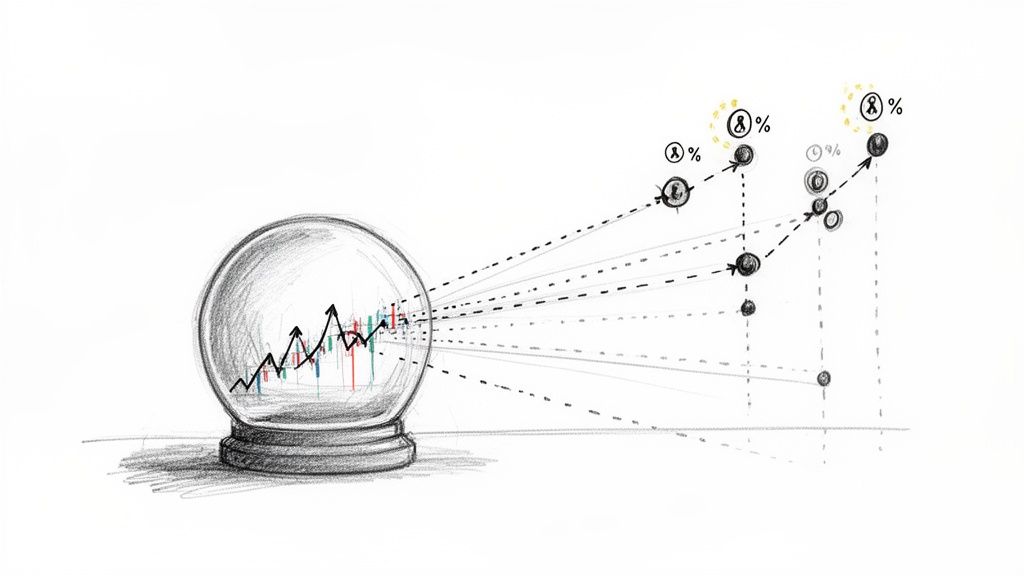
Predictive segmentation uses machine learning and AI algorithms to forecast future customer behavior, such as churn risk, lifetime value, and expansion potential. Instead of analyzing past actions, this forward-looking strategy identifies opportunities and threats before they become obvious. For B2B SaaS, it enables proactive intervention by anticipating which accounts are likely to churn, upgrade, or become brand advocates.
This advanced approach moves beyond reactive measures, allowing you to allocate resources more effectively. For instance, platforms like Gainsight and HubSpot use predictive models to score customer health or lead quality, empowering teams to focus on the accounts that matter most for revenue protection and growth. It transforms historical data into a strategic asset for future planning.
When to Use This Strategy
Predictive segmentation is most valuable when you need to proactively manage customer relationships at scale. Use it to identify high-potential leads for your sales team, flag at-risk accounts for your customer success managers, and pinpoint users who are prime candidates for upselling long before they signal intent. It's ideal for mature SaaS companies with sufficient historical data to train accurate models.
Actionable Implementation Tips
To successfully implement this data-driven customer segmentation strategy, start with clear goals and validate your models rigorously.
Define a Clear Business Outcome: Begin with a specific objective, such as "reduce churn by 15%" or "identify 100 new expansion opportunities per quarter." This focus will guide your data selection and model development from the start.
Integrate Scores with Your Marketing Automation: Use SMASHSEND's API to push predictive scores (e.g., "Churn_Risk_Score" or "LTV_Prediction") into contact profiles. You can then use these scores as triggers for automated workflows. For example, a churn score crossing a certain threshold could initiate a re-engagement campaign.
Start Simple and Iterate: You don't need complex neural networks to begin. Start with simpler models like logistic regression to predict binary outcomes (e.g., churn vs. no churn). Validate its performance on a test dataset before deploying, and plan to retrain the model quarterly to maintain its accuracy.
10-Strategy Customer Segmentation Comparison
| Strategy | 🔄 Implementation complexity | ⚡ Resource requirements | ⭐📊 Expected outcomes | 💡 Ideal use cases | Key advantages |
|---|---|---|---|---|---|
| Behavioral Segmentation | 🔄🔄🔄 (event tracking & triggers) | ⚡⚡⚡ (analytics + infrastructure) | ⭐⭐⭐ 📊 (highly predictive of intent) | Lifecycle targeting, churn prevention, onboarding | Real-time intent signals; timely, relevant outreach |
| Firmographic Segmentation | 🔄🔄 (stable attributes) | ⚡⚡ (enrichment + CRM sync) | ⭐⭐ 📊 (good baseline targeting) | ABM foundations, territory alignment, ICP filtering | Stable, aligns with sales; easy CRM integration |
| RFM Segmentation (Recency, Frequency, Monetary) | 🔄🔄 (rules & scoring) | ⚡⚡ (historical data + automation) | ⭐⭐📊 (actionable prioritization) | Prioritizing support/sales, win-back, VIP programs | Simple, interpretable scoring for prioritization |
| Lifecycle Stage Segmentation | 🔄🔄🔄 (stage definitions + pipelines) | ⚡⚡⚡ (automation + cross-team coordination) | ⭐⭐⭐ 📊 (improves stage conversions) | Onboarding flows, nurture sequences, expansion plays | Contextual messaging; aligns marketing/product/CS |
| Psychographic & Value-Based Segmentation | 🔄🔄🔄🔄 (qual research + synthesis) | ⚡⚡⚡⚡ (surveys, interviews, analysis) | ⭐⭐⭐ 📊 (high resonance when validated) | Messaging personalization, product prioritization, brand positioning | Reveals "why" customers buy; enables emotion-driven copy |
| Technographic Segmentation | 🔄🔄🔄 (stack mapping & enrichment) | ⚡⚡⚡ (third-party data + validation) | ⭐⭐📊 (useful for integrations/risks) | Integration pitches, partner programs, competitive displacement | Identifies integration opportunities and churn risks |
| Intent-Based Segmentation | 🔄🔄🔄🔄 (real-time signals + vendors) | ⚡⚡⚡⚡ (third-party intent + tracking) | ⭐⭐⭐ 📊 (predictive of near-term conversions) | Sales prioritization, timely outreach, account expansion | Detects purchase intent; shortens sales cycles |
| Account-Based Marketing (ABM) Segmentation | 🔄🔄🔄🔄🔄 (account research + orchestration) | ⚡⚡⚡⚡⚡ (custom content + human resources) | ⭐⭐⭐⭐ 📊 (very high ROI for target accounts) | Enterprise deals, named-account programs, multi-threaded outreach | Hyper-personalized at account level; improves win rates |
| Engagement & Channel/Preference-Based Segmentation | 🔄🔄🔄🔄 (omnichannel orchestration) | ⚡⚡⚡ (preference centers + analytics) | ⭐⭐⭐ 📊 (boosts engagement & deliverability) | Re-engagement, cadence optimization, preference-respecting campaigns | Respects preferences; improves deliverability and satisfaction |
| Predictive Segmentation (AI-Driven) | 🔄🔄🔄🔄🔄 (modeling + MLOps) | ⚡⚡⚡⚡⚡ (historical data + DS expertise) | ⭐⭐⭐⭐ 📊 (proactive revenue protection/expansion) | Churn prevention, LTV forecasting, propensity-based outreach | Anticipates behaviors; scales proactive interventions |
Putting Your Segmentation Strategy into Action
We've explored a comprehensive suite of powerful customer segmentation strategies, from the foundational firmographic and lifecycle models to the forward-looking predictive and intent-based approaches. It's clear that a one-size-fits-all approach to customer communication is no longer viable in the competitive B2B SaaS landscape. The true power lies not in choosing a single strategy, but in skillfully layering them to create a multi-dimensional, dynamic view of your customer base.
The journey from generic messaging to hyper-personalized communication is an iterative one. You don't need to implement all ten strategies overnight. The key is to start with a solid foundation, validate your assumptions with data, and build complexity over time.
Your Actionable Roadmap to Smarter Segmentation
To translate these concepts into tangible business results, follow this structured approach:
Establish Your Foundation: Begin with firmographic and lifecycle stage segmentation. This provides the essential context of who your customers are (company size, industry) and where they are in their journey with you (new user, power user, at-risk). This initial layer helps you prioritize which accounts deserve the most attention.
Enrich with Behavior: Once the foundation is set, layer on behavioral and product-usage data. This is where you move from who the customer is to what they are doing. Are they using key features? Have they stopped logging in? This data provides the "why" behind their lifecycle stage and is critical for creating relevant, timely engagement campaigns.
Refine with Intent and Value: With a solid understanding of your user base, you can introduce more sophisticated models. Use value-based segmentation (like RFM) to identify your most profitable accounts and intent-based signals to uncover which prospects are actively seeking solutions. This is the stage where your marketing becomes proactive rather than reactive.
Automate and Iterate: The final step is to operationalize your strategy. Use a robust platform to build dynamic segments that automatically update as customer data changes. Set up automated workflows triggered by specific behaviors or segment entries. Continuously measure your KPIs, like conversion rates, engagement scores, and churn reduction, to refine your segments and messaging.
Key Takeaway: The most effective customer segmentation strategies are not isolated tactics; they are interconnected layers. Your goal is to build a composite model that starts broad (firmographics) and becomes increasingly granular (behavioral, predictive), allowing you to engage each customer with unparalleled relevance.
Beyond the List: The Strategic Imperative of Segmentation
Mastering these customer segmentation strategies is more than just an email marketing tactic; it's a core business function that drives sustainable growth. A well-executed segmentation strategy directly impacts customer acquisition, expansion revenue, and long-term retention. It allows you to align your product, marketing, and sales efforts around a unified, data-driven understanding of your customer.
By moving from broad assumptions to precise, data-backed segments, you create a more resilient and efficient SaaS business. You can allocate resources more effectively, develop features that solve real user problems, and build customer relationships that are based on genuine value and understanding. Your segmentation model becomes your strategic compass, guiding every customer-facing decision your company makes.
Ready to turn your data into a revenue-generating engine? SMASHSEND provides the powerful segmentation tools and automation workflows you need to implement these strategies seamlessly. Start building dynamic segments and personalized campaigns today by exploring SMASHSEND.