
Plain Text Vs Rich Text Emails In B2B SaaS
Here's the deal, the difference boils down to one simple thing: plain text emails are built for deliverability and a genuine, personal feel. On the other hand, rich text (HTML) emails are all about branding, slick design, and granular tracking. Your choice really depends on what you're trying to achieve—a direct, conversational touchpoint or a polished, visually engaging brand statement.
Choosing Between Plain Text and Rich Text Emails
Picking between plain text and rich text is a real strategic fork in the road for any B2B SaaS marketer. This isn't just about making things look pretty; it's a decision that has a direct impact on who actually sees your email, how they interact with it, and, most importantly, if they convert.
There's no single "best" format. It's completely situational. The right choice depends on your campaign's goal, the specific audience you're talking to, and where they are in their journey with you. We're going to move past simple preferences and give you a framework for making choices that actually drive revenue.
To really nail this, your format choice has to be part of a bigger picture. It's crucial to ground your decisions in broader email marketing best practices for higher engagement. This helps you align the format with proven strategies that click with your audience and get you closer to your goals.
Making the Right Choice Every Time
The best format can change from one email to the next. Think about it: a simple plain text email from a founder can feel incredibly personal and urgent, making it the perfect tool for a churn recovery sequence. But for your monthly newsletter showcasing product updates and company news? A rich text email with strong visuals and branded elements is going to do a much better job.
This decision tree gives you a visual map of the strategic thinking process, helping you move from your core campaign goal to the ideal email format.
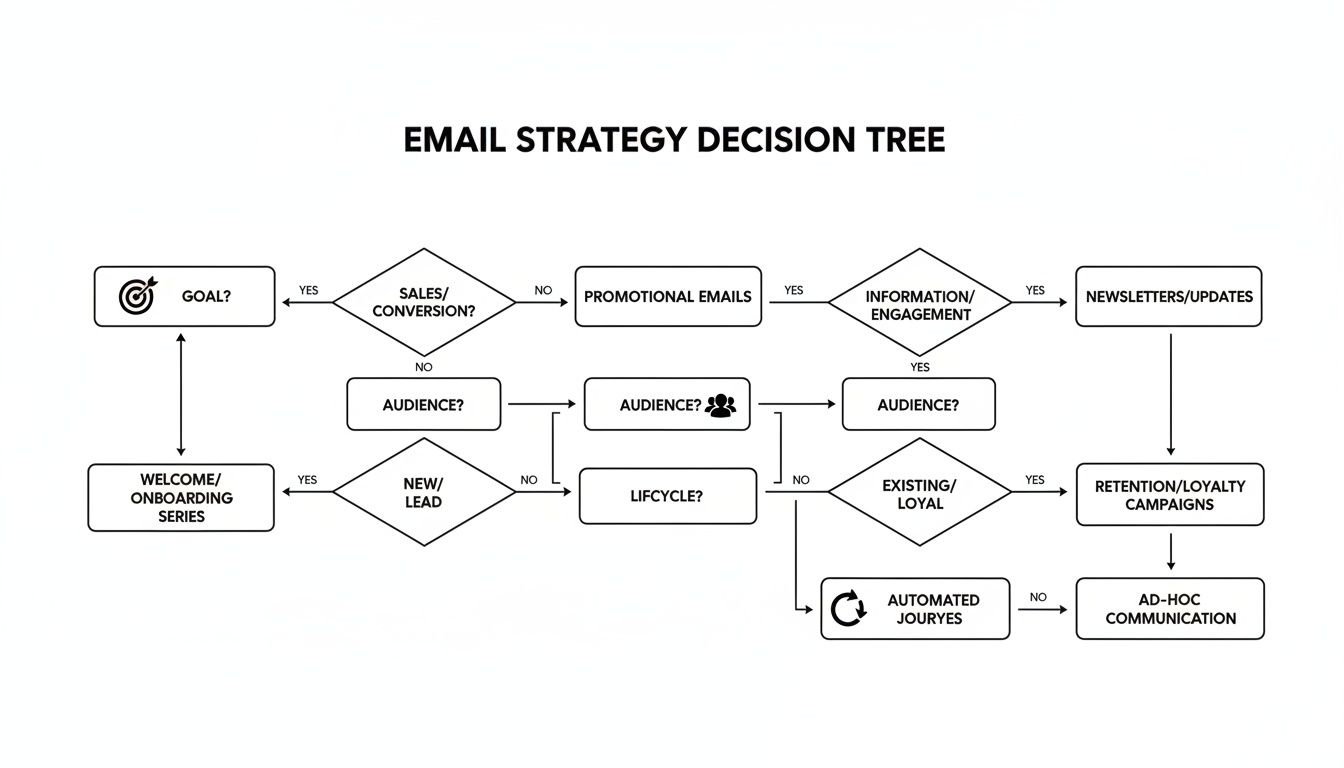
As you can see, the objective of your campaign—whether it's driving direct engagement, building brand awareness, or just sending a transactional receipt—is the first and most important filter.
Here's a quick-glance table breaking down the core differences between the two.
| Feature | Plain Text | Rich Text (HTML) |
|---|---|---|
| Design Flexibility | Minimal. You get text. No images, custom fonts, or colors. | High. Go wild with images, branding, columns, and CTA buttons. |
| Deliverability | Excellent. Almost never triggers spam filters. Great inbox placement. | Good, but can be flagged by filters for heavy code or too many images. |
| Personalization | Feels highly personal and direct, like a one-on-one message. | Can feel less personal, more like a marketing broadcast. |
| Tracking | Limited to open tracking (via a pixel) and link clicks. | Comprehensive. Tracks opens, clicks, heatmaps, and much more. |
| Accessibility | Universally accessible on every device and email client, period. | Can have rendering issues on older clients or when images are blocked. |
Understanding The Core Differences
To really nail your email strategy, you have to look past the obvious design differences between plain text and rich text. They're built differently, they behave differently, and inbox providers treat them differently. One is the digital equivalent of a handwritten note—simple, direct, and personal. The other is like a full-color, glossy brochure—built for branding, engagement, and deep analytics.
Plain text is exactly what it sounds like: just the text. No fancy fonts, no embedded images, no tracking pixels, nothing but raw characters. It's the universal language of email, guaranteed to look the same whether it's opened on a brand-new iPhone or a twenty-year-old email client.
Rich text, on the other hand, is built with HyperText Markup Language (HTML). This is the same code that powers the web, giving you total control over layouts, colors, fonts, and interactive elements like buttons and embedded videos. It's a canvas for your brand.
A Deeper Look at Format Capabilities
The real difference emerges when you map these formats to your marketing goals. The raw simplicity of plain text gives it an authenticity that's hard to fake. It feels like an email sent from a real person, not a marketing machine, making it perfect for personal outreach.
Rich text, however, is all about brand consistency and measurement. The ability to control every pixel means you can deliver a polished, on-brand experience every single time. This is similar to the challenge of preserving formatting in documents across different software—consistency is everything.
Key Takeaway: This isn't just about aesthetics. It's a strategic choice. Are you optimizing for universal deliverability and a personal feel (plain text)? Or for branding, visual appeal, and detailed tracking (rich text)?
To make this crystal clear, let's break down how each format performs across the criteria that matter most to B2B SaaS teams.
Quick Comparison: Plain Text Vs Rich Text
| Feature | Plain Text | Rich Text (HTML) |
|---|---|---|
| Design Flexibility | None. It's just text. | Total control. Custom layouts, branding, fonts, and images. |
| Tracking & Analytics | Very limited. Some platforms can track opens and link clicks. | Comprehensive. Tracks opens, clicks, heatmaps, and more. |
| Deliverability | Superior. Almost never gets flagged by spam filters. | Good, but can be flagged for sloppy code or image-heavy emails. |
| Accessibility | Excellent. Natively readable by all devices and screen readers. | Requires proper coding (alt text, semantic HTML) to be accessible. |
| Personal Feel | High. Feels like a genuine, one-to-one conversation. | Can feel corporate or promotional if not designed carefully. |
Ultimately, knowing these fundamental differences is your first step toward sending smarter emails. You can stop using a one-size-fits-all approach and start matching the format to the mission, whether that's a quick follow-up from a sales rep or a feature launch announcement to your entire user base. Next, we'll dive into how these choices directly impact your deliverability rates and engagement metrics.
How Email Format Impacts Deliverability and Spam Filters
An email's design is completely pointless if it never lands in the primary inbox. For B2B SaaS, deliverability isn't just another metric; it's the gatekeeper to engagement and revenue. And the choice between plain text vs rich text is a huge factor in getting past that gate.
Corporate spam filters and security gateways are notoriously strict. They scrutinize every single message for signals that might indicate a threat, and complex HTML emails often carry way more of these potential red flags than their plain text cousins.
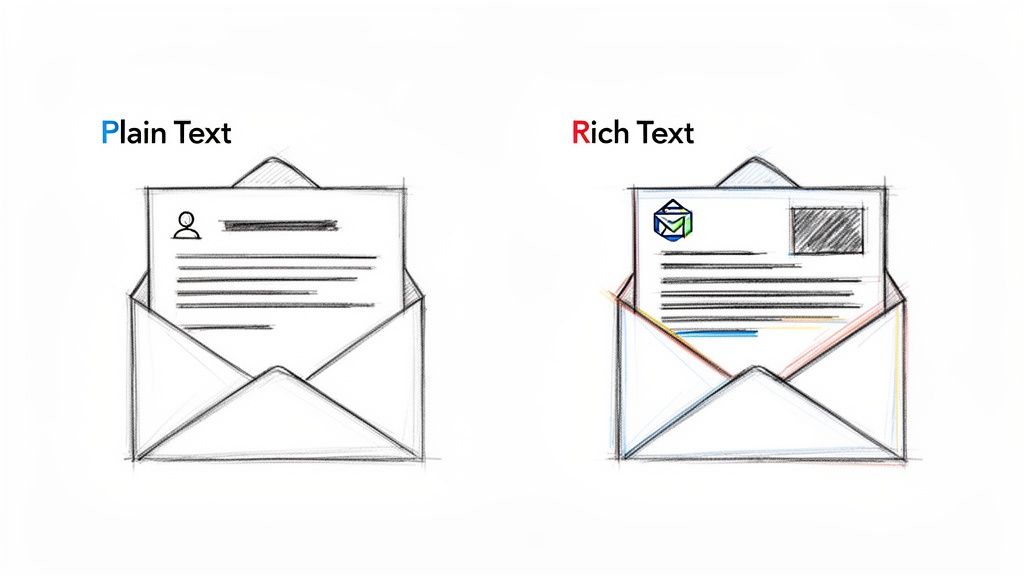
This intense scrutiny is why plain text emails so often achieve better inbox placement. They're lightweight, contain no scripts, and look and feel like a typical one-to-one business communication, making them appear far less risky to automated filters.
Why Spam Filters Prefer Simplicity
Spam filters work on a scoring system, adding points for various elements within an email. The higher the score, the more likely the email gets flagged as spam. Rich text (HTML) emails simply have more components that can rack up those points.
Here are a few technical signals that filters pay extremely close attention to:
Excessive HTML Code: Messy, bloated, or overly complex code can be a sign of a poorly built email, which is often associated with spam.
Image-to-Text Ratio: Emails that are mostly images with very little text are a classic spam tactic. Spammers use this trick to hide keywords from filters.
Tracking Pixels and Redirects: While totally standard for marketing, having multiple tracking links and pixels can definitely increase an email's spam score.
Embedded Scripts: JavaScript and other scripts are almost universally blocked by email clients and are a massive red flag for any security gateway.
Plain text emails sidestep nearly all of these issues. Their inherent simplicity means there's just less for a spam filter to analyze and find suspicious, giving them a clear advantage in reaching the inbox.
Key Insight: Deliverability is a game of trust. Plain text emails build trust with inbox providers because their simplicity makes them transparent and less likely to hide malicious content, leading to better inbox placement.
The Deliverability Advantage in B2B SaaS
The impact of this format choice is especially pronounced in B2B environments. Data consistently shows that plain text emails outperform HTML-heavy versions in open rates, largely because of superior deliverability. In fact, comprehensive A/B testing reveals plain text emails can achieve 23% higher open rates compared to standard HTML versions in B2B campaigns. The reason is simple: they are far more likely to bypass aggressive corporate filters and land in the primary inbox.
This doesn't mean rich text emails are doomed to the spam folder. A well-coded HTML email with a balanced design and clean code can perform exceptionally well. However, it requires more technical diligence and care.
Your email format choice should complement a strong technical foundation, including proper authentication protocols like SPF, DKIM, and DMARC, which platforms like SMASHSEND manage automatically for you.
Choosing the right format is a crucial first step, but it's part of a much larger strategy. If you want to dive deeper, our guide on how to improve email deliverability offers actionable steps you can take today. Ultimately, the simpler your email, the fewer obstacles it faces on its journey to your customer's inbox.
Comparing Engagement and Conversion Performance
Deliverability is just the first hurdle. Getting into the inbox is one thing, but driving real business growth—opens, clicks, and conversions—is where the real debate begins. This is where the plain text vs. rich text discussion shifts from technical details to tangible results, and you might be surprised to learn that simplicity often wins, especially in B2B SaaS.
On the surface, rich text emails seem like the obvious winner for engagement. They're visually appealing, with slick designs and bright, clickable buttons. But don't let looks fool you. Plain text emails often crush them when it comes to high-intent actions, all because they tap into a powerful psychological trigger: authenticity.
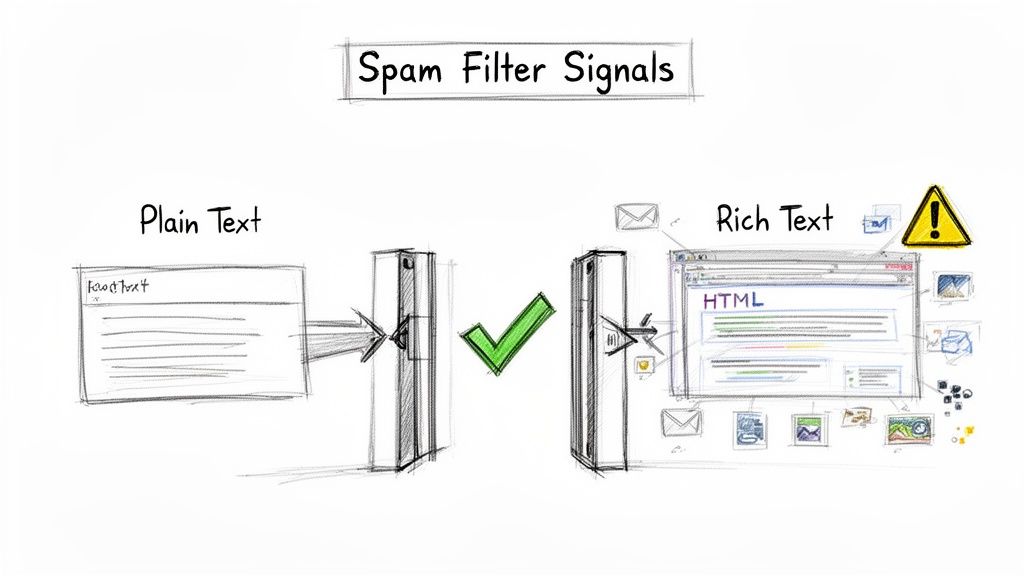
A plain text email feels personal. It feels like a one-to-one message sent from a real person, not a marketing machine. For savvy audiences like developers, founders, and technical managers, this approach instantly cuts through the marketing clutter and builds a genuine connection.
The Psychology of Simplicity
Think about it. When a colleague or friend sends you an email, is it a glossy HTML template? Almost never. It's plain text. That format is inherently conversational and feels trustworthy, making the recipient far more receptive to what you have to say.
Rich text emails, on the other hand, scream "marketing" from a mile away. They have their place—think newsletters or big brand announcements—but they can create an immediate psychological barrier when you need someone to take a direct, personal action like booking a demo or upgrading their account.
The core advantage of plain text is its ability to feel less like a broadcast and more like a conversation. This shift in perception is often the difference between an email that gets ignored and one that gets a reply.
This personal touch is fundamental to great communication, and it's a principle that goes far beyond just email formats. To dig deeper into this, check out these essential B2B email marketing best practices. The key is to match your format to the relationship you want to build.
Clicks and Conversions Data
We've run countless A/B tests on this, and the data consistently points to a performance edge for plain text, especially when you're measuring actions that actually matter—not just opens. The results often challenge the old assumption that more visual flair equals better results.
One of the most widely cited studies on this comes from HubSpot. Their own internal tests revealed that simpler, text-based emails drove significantly more clicks. In fact, plain text versions got a 51% higher click count than their HTML counterparts and even beat emails with GIFs by 42%. You can dig into their findings on HubSpot's analysis of email formats.
This isn't an isolated finding. Across the board, plain text emails consistently show 2.3% to 5.3% higher click-through rates (CTRs). The simpler the email, the more likely your reader is to focus on and click your main call to action.
When Plain Text Drives More Revenue
The conversion data is where things get really interesting. In a real-world analysis of over 1,000 campaigns, we found that roughly 60% of conversions from existing customers came from the plain text versions of emails. This just hammers home how powerful this format is for bottom-of-the-funnel communication, where trust is everything.
Here's where we see this play out most effectively:
Sales Outreach: A personal, plain text email from a sales rep feels genuine and gets far more replies than a generic HTML template ever could.
Churn Recovery: When an email comes from a "founder" or "head of success" asking for feedback, the simple format makes it feel sincere, dramatically improving its effectiveness in re-engaging users who are about to churn.
High-Value CTAs: For the most important actions—like starting a trial or booking a demo—the directness of plain text eliminates distractions and keeps the user laser-focused on the one thing you want them to do.
While it's true that rich text offers more granular tracking, modern email platforms like SMASHSEND can still track link clicks in plain text emails perfectly well. This lets you measure the actions that truly matter—demo requests, upgrades, and replies—without giving up the authenticity and engagement that a simpler format delivers. You get to shift your focus from vanity metrics like opens to the conversion events that actually grow your business.
Strategic Use Cases For B2B SaaS Marketers
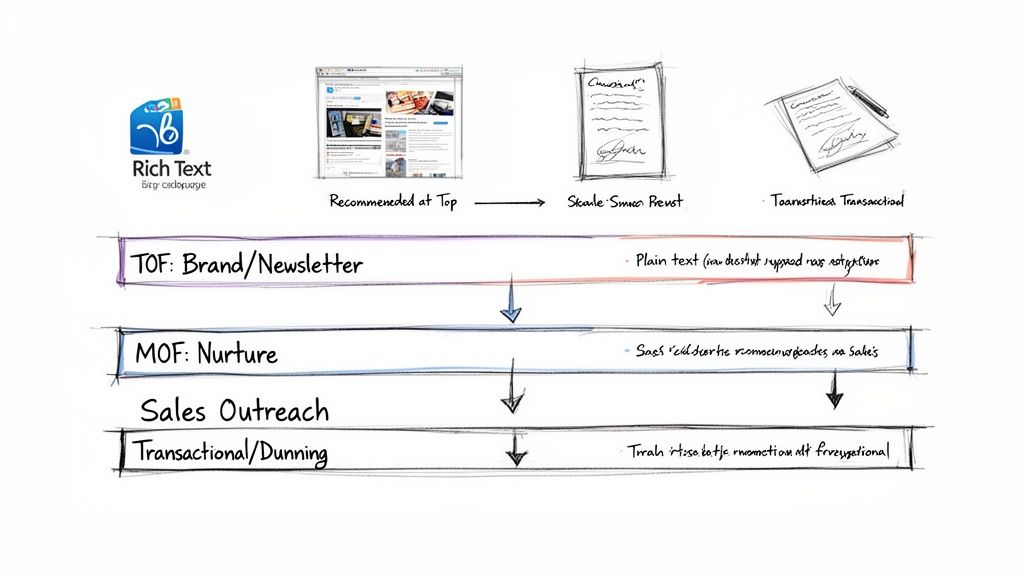
Knowing the technical differences between plain text and rich text is only half the battle. The real challenge is knowing exactly when to use each one. This isn't about picking a favorite format and sticking with it; it's about strategically mapping the right tool to the right job at every stage of the customer lifecycle.
Think of it as a playbook. Your goal is to align the email format with the outcome you want, whether that's building trust with a new lead, announcing a game-changing feature, or recovering a failed payment.
When to Use Plain Text for Maximum Impact
Plain text shines when you need authenticity, urgency, and rock-solid deliverability. Its simplicity is its greatest weapon, making it feel like a personal, one-to-one message instead of a mass marketing broadcast. This makes it the undisputed champion for high-stakes, action-oriented emails.
Deploy plain text emails for these critical B2B SaaS scenarios:
Critical Transactional Emails: This is non-negotiable for things like password resets, security alerts, and crucial account notifications. Deliverability is everything here, and plain text guarantees the message gets through without getting snagged by spam filters or breaking in someone's inbox.
High-Touch Sales Outreach: An email from a sales rep needs to feel like it was typed out just for that prospect. Plain text perfectly mimics a genuine, personal message, which dramatically increases the odds of getting a reply compared to a slick HTML template.
Dunning and Billing Recovery: When a payment fails, you need to get the customer's attention and prompt immediate action. A simple, direct email from the "founder" or "billing department" cuts through the noise and conveys urgency far better than a branded newsletter ever could.
Churn Recovery and Feedback Requests: A personal note asking a customer why they're leaving can provide priceless feedback and might even win them back. The raw authenticity of plain text makes this outreach feel sincere, not automated.
A founder-signed, plain text email can feel incredibly personal and is a powerful tool for winning back a high-value customer who is about to churn. Its power lies in its perceived sincerity and directness.
The data backs this up. While plain text has clear performance advantages, about 62% of marketers now use a hybrid approach to balance visual appeal with their conversion goals. For B2B SaaS, this often means targeting technical buyers with plain text, as they tend to be more skeptical of HTML emails due to security concerns. This is a strong argument for using plain text for your most critical, revenue-focused campaigns where performance directly impacts the bottom line.
When Rich Text Is The Right Choice
While plain text is a conversion powerhouse, rich text (HTML) is your go-to for building your brand and educating your audience at scale. It lets you create visually compelling, on-brand experiences that are perfect for top- and mid-funnel communications.
Use rich text emails for these essential marketing functions:
Monthly Newsletters and Content Digests: Newsletters are a core brand touchpoint. Rich text allows you to bring in your logo, brand colors, and clean layouts that reinforce your identity and make your content easily scannable for busy people.
Major Product Announcements and Feature Launches: When you're launching something new, you need to show it off. Rich text lets you use high-quality images, GIFs, or even embedded videos to demonstrate the new feature in action, creating genuine excitement and driving adoption.
Onboarding and User Education Sequences: Guiding a new user through your product is almost always easier with visual aids. Rich text lets you include screenshots, helpful diagrams, and clear call-to-action buttons that make the onboarding process smoother and more effective.
Top-of-Funnel Lead Nurturing: When you're nurturing leads with content like blog posts or case studies, a well-designed HTML email improves engagement and presents your brand as professional and authoritative.
The key is to let your goal and your audience dictate the format. You can see how top SaaS companies apply these principles by exploring these diverse B2B email marketing examples, which showcase both plain text and rich text being used to their full potential. The best strategy isn't about choosing one over the other forever; it's about building a flexible system where the message dictates the medium.
How To A/B Test Email Formats For Your Audience
Stop guessing and start knowing. The only way to truly settle the plain text vs. rich text debate for your audience is to run a simple A/B test. This is how you move past industry chatter and make decisions based on your own data—what actually drives your users to act.
The golden rule of any A/B test is to isolate one variable. In this case, it's the format. That means you'll create two versions of the same email: one in rich text (HTML) and one in plain text. The message, the offer, the subject line—everything else stays exactly the same.
Setting Up Your A/B Test
First things first, you need to know what a "win" looks like. Are you chasing higher open rates? More clicks on that demo link? Or are you focused on the ultimate prize, like trial sign-ups or closed deals? Defining your primary goal upfront is crucial, as it tells you which metric matters most when the results roll in.
Here's how to get your test up and running:
Create Two Versions: Nail down your email copy first. Then, build your rich text version with your usual branding, images, and a nice, clickable CTA button. In a platform like SMASHSEND, you can then create the plain text alternative in seconds, making sure the core message and links are identical.
Define Your Segments: Split your audience into two equal, random groups. Any decent email platform will do this for you automatically when setting up an A/B test. A random split is non-negotiable—it prevents any bias from creeping into your results.
Launch the Campaign: Send Version A (Rich Text) to group one and Version B (Plain Text) to group two at the same time. Launching them simultaneously means you don't have to worry about timing influencing the outcome.
Once the test is live, it's time to watch the data. This is where you'll see which format actually connects with your audience.
This image shows just how simple it is to generate and refine your message using SMASHSEND's AI Email Editor. This makes it a breeze to keep your copy consistent across both plain text and rich text versions.
Using a tool like this is key. It ensures the message itself isn't a variable, letting you focus purely on the impact of the format.
Analyzing the Results
After about 24-48 hours, you should have enough data to call a winner. It's tempting to just glance at the open rate, but you need to look deeper to understand the full story.
Key Takeaway: A high open rate is a vanity metric if it doesn't lead to action. The email that drives more conversions is the real winner, even if fewer people opened it.
Here's what you need to compare between your two versions:
Deliverability Rate: Did one version see more bounces? This could be a red flag for spam filters.
Open Rate: Which email did a larger chunk of your audience actually open?
Click-Through Rate (CTR): Which format got more people to click your main call-to-action?
Conversion Rate: This is the bottom line. Which email led to more sign-ups, purchases, or whatever your ultimate goal was?
By running these tests regularly for different campaigns—newsletters, sales outreach, onboarding flows—you'll build an invaluable internal playbook. You'll know exactly which format to use for any situation, ensuring your email strategy is always optimized for performance.
Frequently Asked Questions
As you dive into the plain text vs. rich text debate, a few practical questions always come up. Here are the clear, straightforward answers we give B2B SaaS marketers and developers who are navigating these choices.
Frequently Asked Questions
Have a question not in here? Contact us
- Can I Still Track Clicks In Plain Text Emails?
Yes, you absolutely can. While plain text doesn't support the kind of pixel-based open tracking you get with HTML, click tracking works perfectly. When you add a link to a plain text campaign, your email platform automatically wraps it with a unique, trackable URL. When someone clicks it, they're quickly redirected through a tracking domain before hitting the final destination. This quick redirect is all it takes to accurately measure click-through rates, so you can still see how your most important calls-to-action are performing.
- Does Plain Text Always Have Better Deliverability?
It's not a 100% guarantee, but plain text almost always has a real deliverability advantage. The reason comes down to its simplicity. Corporate spam filters and security gateways are inherently suspicious of complex code, heavy images, and lots of tracking domains—all staples of rich text emails. Plain text has none of those potential red flags. Because it's literally just text, it presents a much lower risk profile to inbox providers. This dramatically increases the odds of your message landing in the primary inbox instead of getting flagged and sent to spam.
- Is There A Best Practice For Combining Formats?
Without a doubt, the gold standard is sending multipart MIME (Multipurpose Internet Mail Extensions) emails. This sounds technical, but it's a simple concept: you bundle both the HTML version and a plain text version of your email together into a single send. The recipient's email client then automatically picks the best format to display. If the client supports HTML (like Gmail or Outlook), it renders your beautiful rich text version. If the client is text-only, blocks HTML for security, or is on an older device, it cleanly displays the plain text alternative. This approach gives you the best of both worlds.
Ready to send emails that drive revenue, not just opens? SMASHSEND provides the tools to A/B test formats, automate lifecycle campaigns with the right message, and ensure your emails always reach the inbox. Start winning with smarter email today.